
Africa’s Trade Deficit With China Widens 34.48% to $80 Billion in Jan-Aug 2026
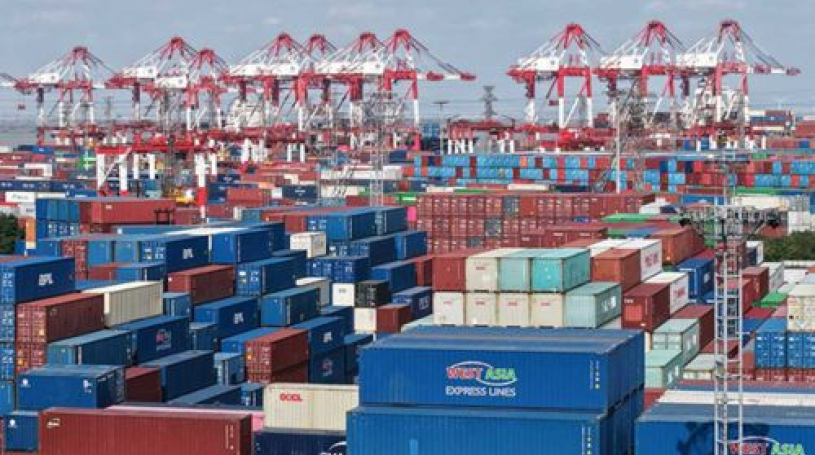
Africa’s trade deficit with China widened by 34.48% year-on-year to $80.07 billion in the first eight months of 2026, according to data from China’s General Administration of Customs. Chinese exports to African countries rose 25.8% to $177 billion during the period.
Chinese imports from Africa increased 19% to $96.93 billion, bringing total China-Africa trade to $273.94 billion, up 23.3% from the same period in 2025.
The widening deficit comes as rising trade barriers imposed by the United States and the European Union, combined with overcapacity in some Chinese industries, redirect Chinese exports toward markets such as Africa, Southeast Asia, and Latin America. The double-digit increase in Chinese imports from Africa was driven in part by strong demand for raw materials, particularly minerals and energy products.
However, it remains difficult to determine how much of the growth recorded during the period resulted from China’s zero-tariff policy for imports from the 53 African countries that have diplomatic relations with Beijing, rather than changes in commodity prices and trade volumes. The policy’s extension to 20 African countries not classified as least developed countries took effect on May 1, 2026.
China’s decision to grant duty-free access to all its African trading partners except Eswatini, the only African country that maintains diplomatic relations with Taiwan, followed an earlier measure covering 33 African least developed countries. Those countries had benefited from zero-tariff treatment since December 1, 2024.
Structural imbalances
Africa’s chronic trade deficit with China stems largely from the contrasting composition of African and Chinese exports. African shipments to China remain heavily concentrated in raw materials and minimally processed products, including minerals, hydrocarbons, and some agricultural goods. Chinese exports to Africa are dominated by manufactured products, including machinery, equipment, electronics, and technologies used in infrastructure and renewable energy.
The zero-tariff treatment granted to African countries to narrow the trade imbalance has not resolved the underlying problem. Removing tariffs may increase export volumes, but it does not guarantee greater value added in African exports. According to experts, reducing the deficit will require measures that address limited industrial capacity, insufficient processing of raw materials, and logistical bottlenecks.
In a recently published report, the African Export-Import Bank (Afreximbank) estimated that African countries can fully benefit from China’s zero-tariff treatment only if they introduce reforms to remove structural and operational barriers.
The bank recommended developing regional value chains in high-potential sectors such as agricultural processing, light manufacturing, and mineral processing. It also called for stronger infrastructure and logistics corridors through industrial zones near ports, integrated rail links, dry ports, and cold-storage networks. Other recommendations included adapting exports to changing Chinese consumer preferences and strengthening trade-finance mechanisms such as export credit insurance and commercial loans denominated in Chinese yuan.
Walid Kéfi